
Dr. Azizian’s Books & Articles
BOOKS
The Clear Skin Diet: Unlocking the Secret Link Between Food Sensitivities and Skin Health
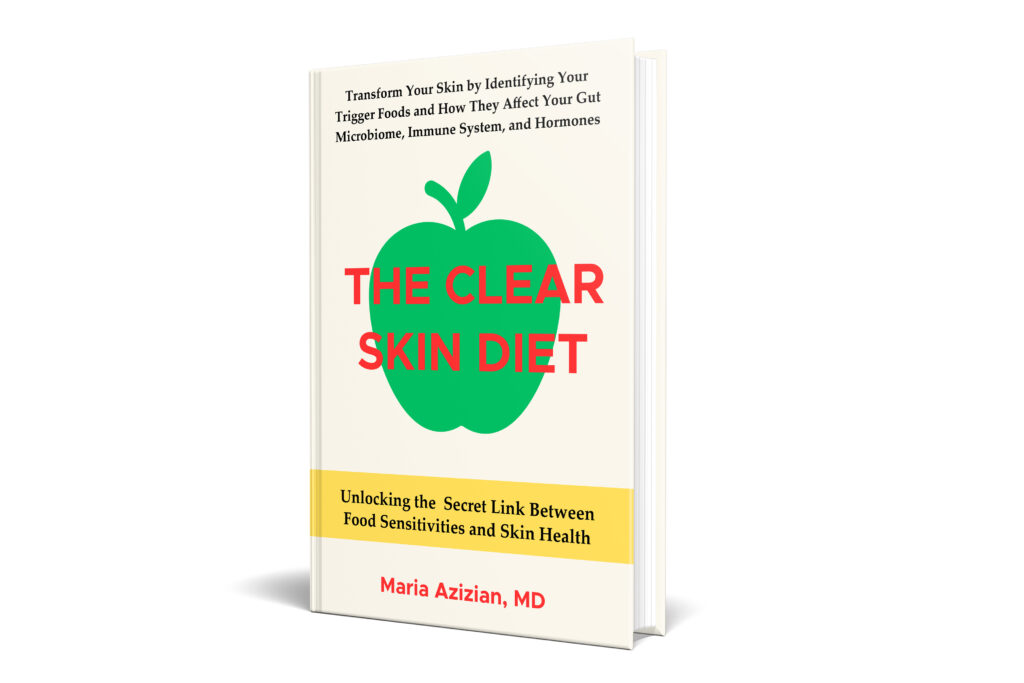
Tired of dealing with persistent skin issues? Discover the transformative power of identifying your trigger foods and their profound effects on your skin.
In The Clear Skin Diet, you will learn the difference between food sensitivities and allergies and how to identify each. You will also understand how food sensitivities are connected to your immune system, hormones, leaky gut, and gut dysbiosis. You will examine common food sensitivities, such as gluten, dairy, soy, sugar, eggs, nuts, coffee, wine, chocolate, FODMAPs, and nightshades, focusing on their specific impacts on your skin. The Clear Skin Diet explores the root causes of eczema, acne, psoriasis, rosacea, hives, seborrheic dermatitis, and other skin conditions from the standpoint of functional medicine.
In The Clear Skin Diet, Dr. Maria Azizian—an Institute of Functional Medicine-certified physician and board-certified general surgeon—blends her expertise in skin health and functional medicine to offer a comprehensive, holistic approach to treating chronic skin conditions. Through dietary and lifestyle modifications, modern food sensitivity testing, and the use of beneficial supplements, Dr. Azizian empowers readers to take control of their skin health and overall well-being.
This book provides a template for a healthy, skin—and gut-friendly diet, along with recommended supplements and lifestyle tips. Let this book make a positive change in your life!
Gallbladder Disease Easily Explained By A Surgeon
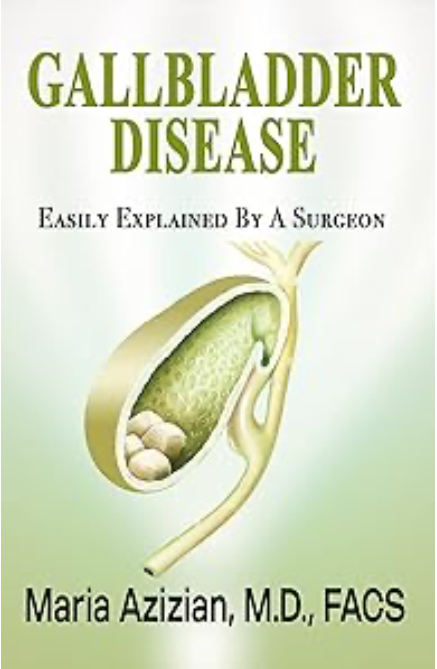
In this concise book Maria Azizian, MD, FACS, a board-certified general surgeon, discusses one of the most common conditions requiring surgery: gallbladder disease. This book is recommended for patients, their families, medical students, and anyone who enjoys learning about medical concepts written in a simple, engaging language.
Many concepts regarding gallbladder conditions are explored in the book including the causes behind gallbladder disease, the formation of gallstones, and the diseases of the pancreas, common bile duct, and intestine that arise due to gallstones. Dr. Azizian also explains gallbladder surgery, its risks, and its post-operative course. Special attention is given to the post-operative diet and changes in the gastrointestinal (GI) system.
As a helpful guide, patient scenarios and colorful schematic representations of medical concepts are presented in the book, which consists of short chapters that anyone, not just medical professionals, can read and understand.
ARTICLES
What’s Up With Sunscreens? By Maria Azizian MD FACS
A lot of my patients have been inquiring about the recent data from JAMA (Journal of the American Medical Association) regarding the safety of sunscreens.
But, first, let’s do a little review:
What do sunscreens do?
1) Decrease skin cancer
2) Decrease aging (wrinkles)
3) Prevent sunburn
There are 2 types of sunscreens:
1) Physical or Barrier Sunscreens have 2 ingredients, titanium dioxide and zinc oxide.
Physical sunscreens create a protective barrier, protect against both UVA and UVB, and they do not absorb into the skin. They are recommended for people with sensitive skin and for children.
2) Chemical Sunscreens are composed of many ingredients that are absorbed through the skin. They also protect against UVA and UVB.
In summary, the physical sunscreens reflect, and chemical sunscreens absorb. The physical sunscreens tend to be white and somewhat thick, unlike sleeker in texture chemical sunscreens.
Pertinent to chemical sunscreens, what level of absorption matters?
According to FDA, the blood level of greater than 0.5 ng/mL of given ingredient matters in terms of its potential effect.
In a recent study, healthy volunteers were kept indoors without sunlight for a week, and sunscreen was applied 4 times a day for 4 consecutive days.
Throughout their stay, their blood was tested for levels of avobenzone, oxybenzone, octocrylene, and ecamsule (the most common active ingredients).
The blood level of each chemical was shown to reach much higher than than 0.5 ng/ mL.
At this point, it is not known what harm these ingredients may cause.
According to the FDA, 12 sunscreen ingredients lack enough data to support whether they are completely safe. They are cinoxate, dioxybenzone, ensulizole, homosalate, meradimate, octinoxate, octisalate, octocrylene, padimate O, sulisobenzone, oxybenzone, and avobenzone.
Among the concerns are that oxybenzone “’is absorbed through the skin to a greater extent than previously understood”.
There are questions about its potential to be an endocrine disrupter, a chemical that can cause cancer, birth defects, and other developmental anomalies.
Based on the insufficient data about chemical sunscreens, at this point it is the safest to recommend sunscreen formulations containing “generally regarded as safe and effective“ (GRASE) ingredients, which are titanium dioxide and zinc oxide for people with sensitive skin and for children.
The usage of chemical sunscreens for adults is not considered unsafe.
FDA doesn’t have any data to declare them dangerous.
Regardless of the sunscreen used, we recommend wearing protective UV clothing, hats, and sunglasses, and seeking shade.
Sources:
Matta, M, et al. Effect of Sunscreen Application Under Maximal Use Conditions on Plasma Concentration of Sunscreen Active Ingredients: A Randomized Clinical Trial. JAMA. Published online May 6, 2019.
Wilson, FP. Is the Sunscreen Scare Legitimate? Commentary May 21, 2019
Kelly, J. FDA Finds High Systemic Absorption of Sunscreen Ingredients. May 6, 2019
Doheny, K. FDA Proposes Major Changes to Sunscreen Rules. February 22, 2019
US FDA.”Sunscreen: How to Help protect your skin from the sun